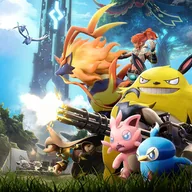
Palworld vs Pokémon
A neutral side-by-side. No “Palworld killed Pokémon” clickbait, no defensive Nintendo apologetics — just what each game does, who each is for, and what the ongoing Nintendo lawsuit means for players.
Side-by-side: Palworld vs Pokémon
| Palworld | Pokémon | |
|---|---|---|
| Released | 1.0 on July 10, 2026 (Early Access from Jan 19, 2024) | Main series since 1996; latest mainline 2024 |
| Developer / publisher | Pocketpair (Tokyo, ~50 staff) | Game Freak (Tokyo, ~200 staff) / The Pokémon Company / Nintendo |
| Engine | Unreal Engine 5 | Proprietary in-house (Switch hardware) |
| Creatures | 300 Pals (base + 3 free expansions + the 1.0 update) — see all on Pindrop | 1,025+ Pokémon across all 9 generations |
| Element / type system | 9 elements (Fire, Water, Grass, Electric, Ice, Dragon, Dark, Ground, Neutral) | 18 types (incl. Fairy, Steel, Psychic, Ghost, etc.) |
| Combat style | Real-time third-person + guns + Pal abilities | Turn-based with status moves, items, and stat gimmicks |
| Multiplayer | Co-op 32 (dedicated) / 4 (P2P) + PvP raids | 1v1 battles, trades, raids (varies by title) |
| Base building | Full base + Pals automate production loops | Minimal (Secret Bases / Pokémon Camp per game) |
| Platforms | PC (Steam), Xbox (Game Pass), PS5, Mac | Nintendo Switch / 3DS only |
| Age rating | ESRB Teen (cartoon violence + alcohol) | ESRB Everyone |
| Launch price | $29.99 — frequent Steam discounts | $59.99 typical first-party Nintendo price |
| Peak concurrent (Steam) | 2.1 million (Jan 2024 — top 2 all-time) | Not on Steam (Switch-exclusive) |
What they share
- →Creature collection as a core loop. Both games are built on encountering wild creatures, catching them with thrown spheres, and adding them to a roster that grows with the player.
- →Elemental type system. Both use rock-paper-scissors-style element matchups (Fire beats Grass, Water beats Fire, etc.) as the strategic spine of combat.
- →Evolution / breeding pipelines. Pokémon evolves; Palworld breeds. Palworld's breeding combos cover similar progression-planning territory.
Visual similarities: 8 Pal × Pokémon pairs
The “Palworld copied Pokémon” argument leans on visual resemblance between specific Pals and specific Pokémon. Here are the eight pairs that get cited most often — judge for yourself.
Fluffy sheep silhouette
Jackal-headed bipedal fighter
Electric yellow-and-black bear/ape
Compact yellow electric starter
Cream-furred quadruped with tufted ears
Anthropomorphic kick-boxer build
Spiked feral wolf with red eyes
Dark feline with glowing markings
Eight is a representative sample — community lists run to 20+ pairs. Visual resemblance hasn't been ruled either way in the ongoing Nintendo v Pocketpair litigation, which focuses on gameplay-mechanic patents, not character designs.
Who makes each game
| Pocketpair (Palworld) | Game Freak (Pokémon) | |
|---|---|---|
| Founded | 2015 (Tokyo, Japan) | 1989 (Tokyo, Japan) |
| Staff size | ~50 (Palworld dev team) | ~200 (across all projects) |
| Notable prior games | Craftopia, Overdungeon, Never Grave | Pokémon mainline since 1996, Drill Dozer, Pulseman |
| Funding model | Independent (Pocketpair-funded) | Backed by Nintendo + The Pokémon Company joint venture |
Elements vs types: how the rock-paper-scissors works
Both games gate combat around an elemental advantage system. Palworld uses nine elements: Fire, Water, Grass, Electric, Ice, Dragon, Dark, Ground, Neutral. See the full Palworld type chart on Pindrop. Pokémon uses 18 types: the nine shared with Palworld plus Bug, Ghost, Steel, Psychic, Rock, Fighting, Poison, Flying, Fairy.
The practical difference: Pokémon's type chart has 324 matchups (18×18) producing more granular strategic choices; Palworld's 81 (9×9) keeps the system readable for new players but caps the strategic ceiling. Most veteran Pokémon players notice the simplification within their first hour.
What sets them apart
Real-time vs turn-based combat
Palworld is a third-person action game where you personally aim and shoot — your Pal fights alongside you. Pokémon (mainline series) is turn-based: you pick a move, the opponent picks a move, dice rolls decide damage. These are different genres dressed in similar aesthetics.
Base-building and automation
Palworld has a full survival-game base system: chop wood, mine ore, smelt ingots, automate it all by assigning Pals to work stations. Pokémon doesn't have anything comparable in scope. If you like Factorio-lite + creature collection, Palworld is closer to that combo than any Pokémon title.
Platforms and price
Palworld runs on PC, Xbox (Game Pass), and PS5 — and costs about half what a new Pokémon title costs. Pokémon mainline is Switch-only and Nintendo holds the price firm. If you don't already own a Switch, Palworld is the lower-cost entry to a creature-collection game.
What about the Nintendo lawsuit?
In September 2024, Nintendo and The Pokémon Company sued Pocketpair (Palworld's developer) over alleged patent infringement. The case focuses on game-mechanics patents, not character designs. As of mid-2026 the litigation is still active and Pocketpair continues to ship free updates. For players: your access to the game isn't affected — Palworld remains available for purchase and play on all its launch platforms.
Which one fits you
Pick Palworld if…
- → You like base-building + automation
- → You want real-time shooter combat
- → You play on PC, Xbox, or PS5
- → You want co-op survival with friends
- → You don't mind teen-rated content
Pick Pokémon if…
- → You want polished turn-based combat
- → You already own a Nintendo Switch
- → You're collecting all 1,000+ species
- → You value franchise lore + decades of media
- → You're buying for a younger player
They're not zero-sum. Plenty of players own both.